Bangla Sahib, Hazur Sahib and Major Historic Gurdwaras in Sikh Tradition
From Gurdwara Bangla Sahib in Delhi to Takht Sachkhand Sri Hazur Sahib in Nanded, a guide to the historic gurdwaras that mark the lives of the Gurus: what happened at each, the five Takhts, and how these places are cared for today.
Published Updated 7 min read
In this article
A gurdwara can be a room in a family home, a converted warehouse in a suburb or a marble complex visited by millions. What makes some gurdwaras historic is their connection to the lives of the Gurus: a place where a Guru stayed, taught, was born, was martyred or passed away. Sikhs visit these places as pilgrims, and many are known simply by a single word, such as Bangla Sahib or Hazur Sahib, that carries a whole history.
This guide introduces some of the most important. It is not exhaustive: there are hundreds of historic gurdwaras across India and Pakistan and beyond. But it covers the places you are most likely to hear of and explains why they matter.
What makes a gurdwara
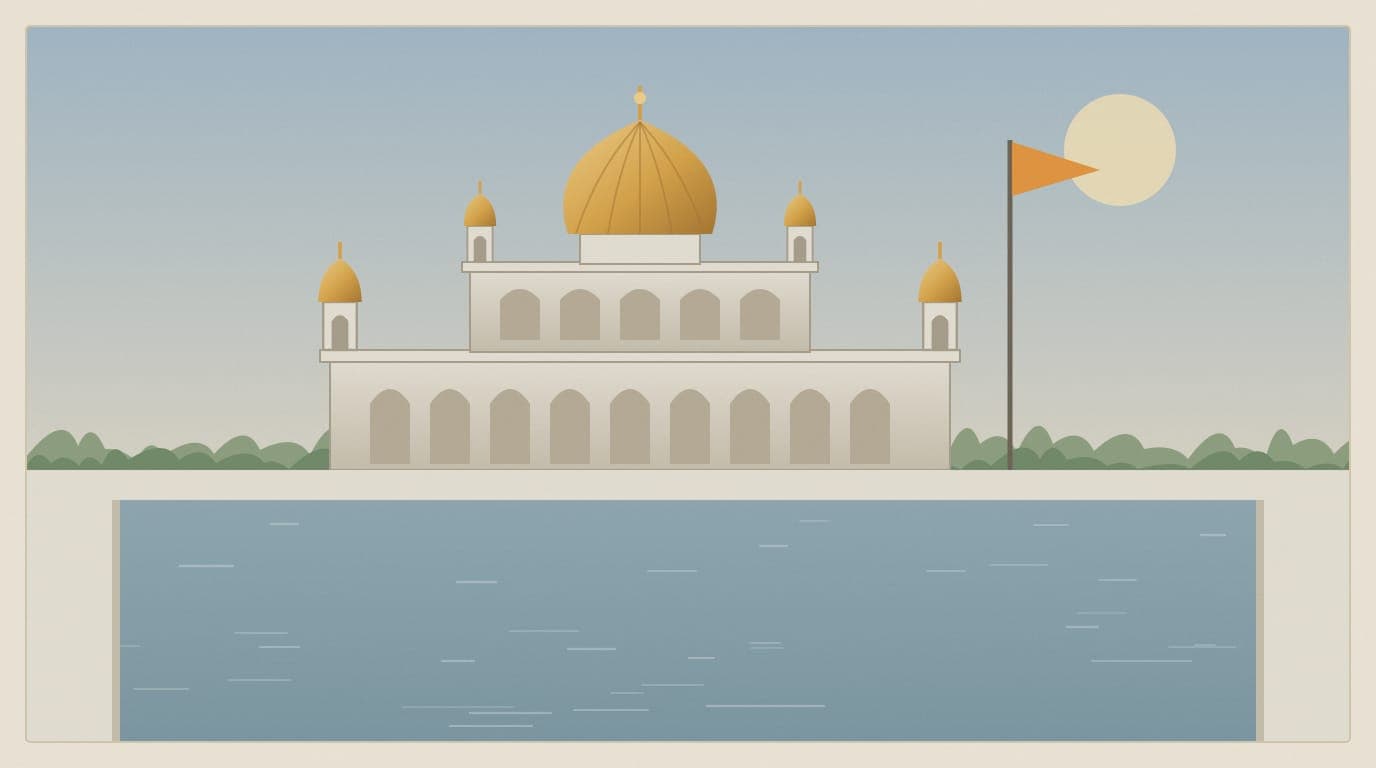
Gurdwara means "the door of the Guru" or "the Guru's house". Every gurdwara, historic or not, has the same essentials: Sri Guru Granth Sahib Ji installed with respect, a space for the sangat to gather, and usually a langar, a free kitchen open to all. The tall flagpole with the saffron or blue Nishan Sahib marks a gurdwara from a distance.
A historic gurdwara adds a story. Its name often records it: Sis Ganj ("the place of the head"), Janam Asthan ("birthplace"), Ber Sahib (named after a ber tree).
Gurdwara Bangla Sahib, New Delhi
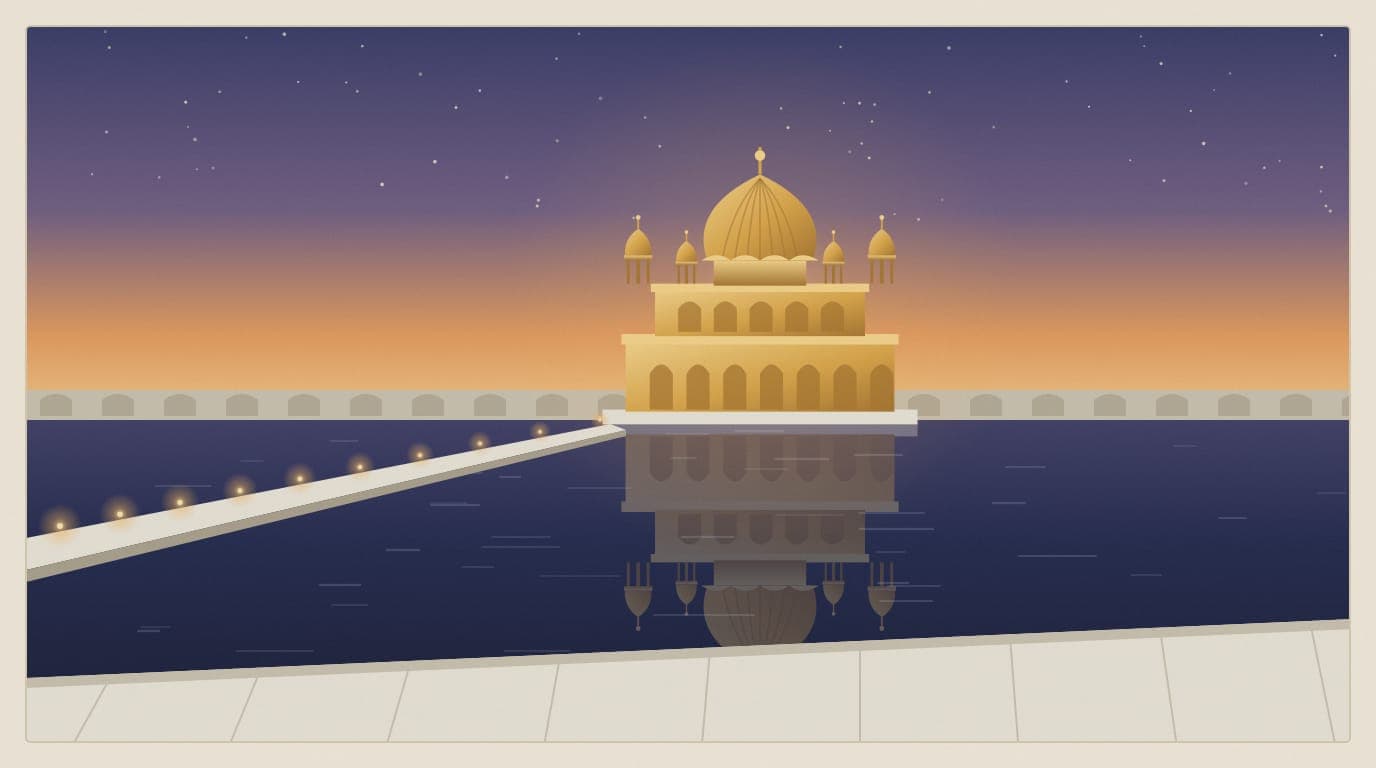
Gurdwara Bangla Sahib, near Connaught Place, is probably the best-known gurdwara in Delhi and one of the most visited in India.
The history
The site was once a bungalow (bangla) belonging to Raja Jai Singh of Amber, a senior noble at the Mughal court. In 1664, Guru Har Krishan Ji, the eighth Guru, then a young child, came to Delhi at the summons of the emperor Aurangzeb and stayed there.
Delhi was then suffering an epidemic, described in different sources as smallpox or cholera. Tradition records that the young Guru tended the sick and that water from the well at the bungalow brought relief to many. The Guru himself fell ill and passed away in Delhi that year, at a very young age. Before his passing he indicated that his successor would be found at Bakala, which led to the recognition of Guru Tegh Bahadur Ji.
The gurdwara today
The first gurdwara on the site was built in 1783 by Sardar Baghel Singh, a Sikh military leader who established several gurdwaras in Delhi at historic sites. The present complex, with its gilded dome and large sarovar, grew over the twentieth century. The water of the sarovar is regarded with deep reverence, and many visitors take some home.
Bangla Sahib is managed by the Delhi Sikh Gurdwara Management Committee (DSGMC). Its langar serves large numbers of people every day, and the complex also houses educational and medical facilities.
Other historic gurdwaras in Delhi
- Gurdwara Sis Ganj Sahib, in Chandni Chowk, marks the place where Guru Tegh Bahadur Ji, the ninth Guru, was executed on the orders of the Mughal authorities in 1675. Sikhs remember his martyrdom as a sacrifice for the freedom of conscience of others.
- Gurdwara Rakab Ganj Sahib, near Parliament House, marks the place where the Guru's body was cremated. Tradition records that Lakhi Shah Vanjara, a trader, carried the body away under cover of a storm and set fire to his own house to cremate it.
- Gurdwara Bala Sahib marks the cremation site of Guru Har Krishan Ji.
Sardar Baghel Singh is credited with establishing gurdwaras at these sites as well.
The five Takhts
A Takht, "throne", is a seat of Sikh authority. There are five, and they hold a special place among historic gurdwaras.
| Takht | Location | Connection |
|---|---|---|
| Sri Akal Takht Sahib | Amritsar, Punjab | Established by Guru Hargobind Ji in 1606, facing Sri Harmandir Sahib; the highest seat of Sikh temporal authority |
| Takht Sri Kesgarh Sahib | Anandpur Sahib, Punjab | Associated with the creation of the Khalsa by Guru Gobind Singh Ji at Vaisakhi 1699 |
| Takht Sri Damdama Sahib | Talwandi Sabo, Punjab | Where Guru Gobind Singh Ji stayed after leaving Anandpur, and where tradition says the final recension of the scripture was prepared; formally recognised as a Takht in 1966 |
| Takht Sri Patna Sahib | Patna, Bihar | Birthplace of Guru Gobind Singh Ji in 1666 |
| Takht Sachkhand Sri Hazur Sahib | Nanded, Maharashtra | Where Guru Gobind Singh Ji spent his final days and passed away in 1708 |
Sri Akal Takht Sahib is the focus of our articles on the Golden Temple's history and on Hukamnamas issued by the Akal Takht.
Takht Sachkhand Sri Hazur Sahib, Nanded
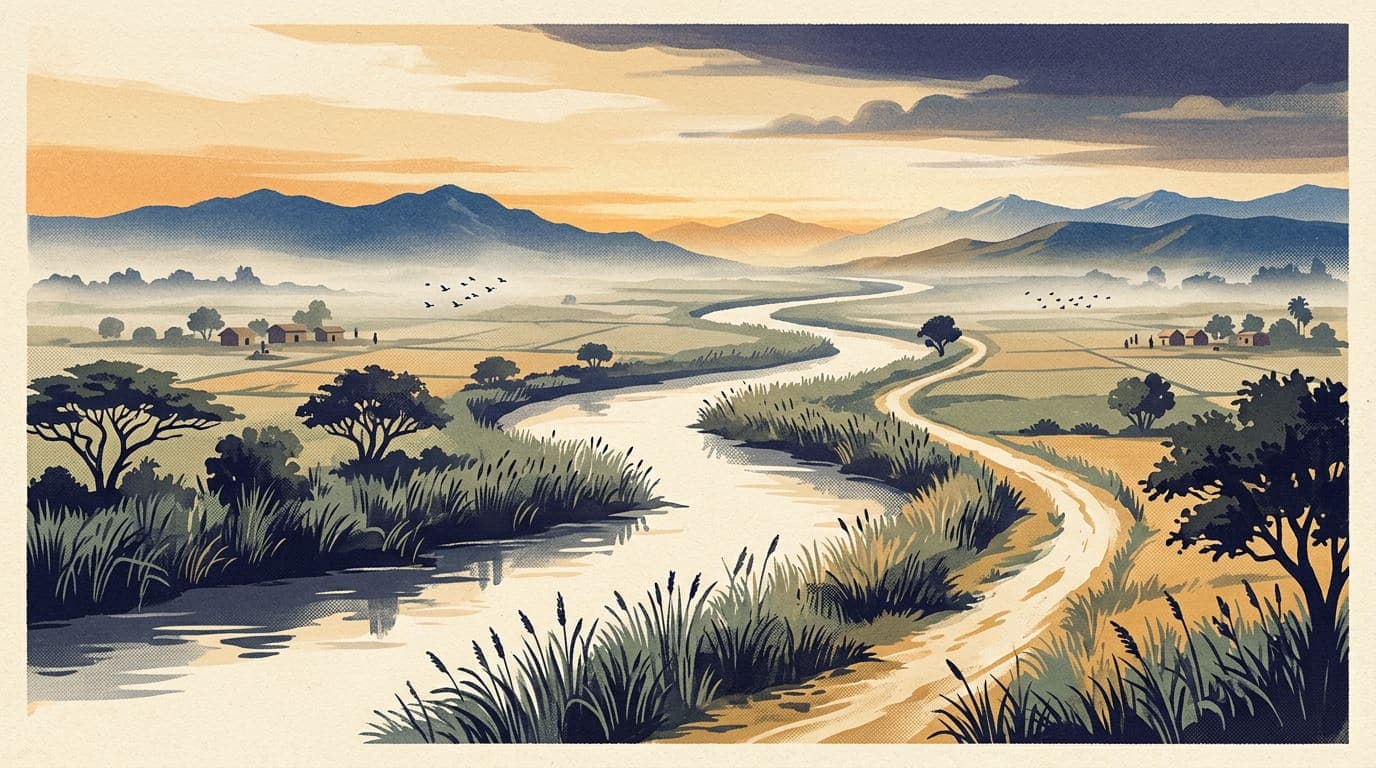
Hazur Sahib stands on the banks of the Godavari river in Nanded, Maharashtra, far from Punjab.
The history
In 1708, Guru Gobind Singh Ji, the tenth Guru, travelled to the Deccan and camped at Nanded. There he was attacked by assassins and wounded. Before his passing later that year, he declared that the line of human Gurus would end, and conferred Guruship on the scripture, Sri Guru Granth Sahib Ji, and on the Khalsa Panth. This makes Nanded the place where the Guruship of Sri Guru Granth Sahib Ji was proclaimed.
It was also at Nanded that the Guru met Banda Singh Bahadur, then an ascetic, and sent him to Punjab, where he led a Sikh campaign against Mughal authority.
The gurdwara today
The present building was constructed between 1832 and 1837 with the patronage of Maharaja Ranjit Singh. Its sanctum, known as the Angitha Sahib, marks the site of the Guru's cremation.
Hazur Sahib has some distinctive traditions of its own, and is managed by its own board under Maharashtra state legislation rather than by the SGPC. Nanded received a major redevelopment for the tercentenary of the Guruship of Sri Guru Granth Sahib Ji in 2008.
Historic gurdwaras in Pakistan
Many of the most important sites of early Sikh history lie in present-day Pakistan, separated from most of the Sikh population since Partition in 1947.
- Gurdwara Janam Asthan, Nankana Sahib: the birthplace of Guru Nanak Dev Ji, and the focus of great celebrations at his Gurpurab. Our article on Guru Nanak Dev Ji's life describes the town's history.
- Gurdwara Darbar Sahib, Kartarpur: where Guru Nanak Dev Ji spent his final years farming and teaching. The Kartarpur Corridor, opened in November 2019, allows pilgrims from India to visit without a visa, though it has been suspended at times.
- Gurdwara Panja Sahib, Hasan Abdal: associated with a traditional story of Guru Nanak Dev Ji and a rock bearing the impression of a hand.
- Gurdwara Dera Sahib, Lahore: near the site of Guru Arjan Dev Ji's martyrdom in 1606, next to the Lahore Fort.
These gurdwaras are managed by Pakistani authorities, with the involvement of the Pakistan Sikh Gurdwara Prabandhak Committee. Groups of pilgrims from India travel to them on major Gurpurabs.
Historic gurdwaras in Punjab
Punjab has hundreds of historic gurdwaras. A few important ones:
- Sri Harmandir Sahib, Amritsar: the central shrine of the Sikh faith. See our guide to its names.
- Sri Tarn Taran Sahib: founded by Guru Arjan Dev Ji, with one of the largest sarovars of any gurdwara.
- Goindwal Sahib: the town of Guru Amar Das Ji, known for its baoli, a stepped well with eighty-four steps.
- Khadur Sahib: associated with Guru Angad Dev Ji, the second Guru.
- Sultanpur Lodhi: where Guru Nanak Dev Ji lived and worked as a young man. Gurdwara Ber Sahib marks the site associated with his spiritual awakening.
- Anandpur Sahib: the town founded by Guru Tegh Bahadur Ji and home to Takht Sri Kesgarh Sahib. It is the centre of the Hola Mohalla celebrations.
- Fatehgarh Sahib: marks the martyrdom of the two younger sons of Guru Gobind Singh Ji at Sirhind, remembered each December.
- Chamkaur Sahib: the site of the battle in which the Guru's two elder sons were killed.
- Sri Muktsar Sahib: remembers the battle of Khidrana and the Chali Mukte, the Forty Liberated Ones, commemorated at Maghi.
Beyond Punjab
- Gurdwara Paonta Sahib, Himachal Pradesh: on the Yamuna, where Guru Gobind Singh Ji lived for several years.
- Gurdwara Hemkunt Sahib, Uttarakhand: a high-altitude gurdwara beside a glacial lake, associated with Guru Gobind Singh Ji's writings. It is open only for part of the year because of snow.
- Gurdwara Nanak Jhira Sahib, Bidar, Karnataka: associated with Guru Nanak Dev Ji's travels in the south.
Who looks after these places
Historic gurdwaras are managed by several bodies:
- The SGPC manages most historic gurdwaras in Punjab, including Sri Harmandir Sahib, and some in other states.
- The Haryana Sikh Gurdwara Management Committee manages gurdwaras in Haryana, under a 2014 state law upheld by the Supreme Court of India in 2022.
- The DSGMC manages the historic gurdwaras of Delhi, including Bangla Sahib and Sis Ganj Sahib.
- Hazur Sahib and Patna Sahib have their own boards or committees.
- Gurdwaras in Pakistan are managed through Pakistani institutions.
Visiting historic gurdwaras
The same simple etiquette applies everywhere:
- Cover your head. Scarves are usually provided.
- Remove your shoes and deposit them at the shoe stand, then wash your hands and feet.
- Do not bring tobacco, alcohol or drugs.
- Sit on the floor in the main hall, and do not turn your back or point your feet towards Sri Guru Granth Sahib Ji.
- Accept karah prashad with cupped hands, and join the langar if you wish.
Our guide to visiting Harmandir Sahib goes into more detail, and much of it applies to any gurdwara.
Summary
Historic gurdwaras mark the places where the Gurus lived, taught, suffered and passed away. Gurdwara Bangla Sahib in Delhi remembers Guru Har Krishan Ji's care for the sick in 1664. Takht Sachkhand Sri Hazur Sahib in Nanded marks where Guru Gobind Singh Ji conferred Guruship on Sri Guru Granth Sahib Ji in 1708. Together with the five Takhts and sites from Nankana Sahib to Hemkunt Sahib, they form a map of Sikh history that pilgrims have followed for centuries.
Frequently asked questions
Why is Gurdwara Bangla Sahib famous?
It stands on the site of a bungalow belonging to Raja Jai Singh of Amber, where Guru Har Krishan Ji, the eighth Guru, stayed in Delhi in 1664 and, tradition says, served people suffering in an epidemic. Its sarovar is regarded with deep reverence, and the gurdwara is one of the most visited in Delhi.
What is special about Hazur Sahib?
Takht Sachkhand Sri Hazur Sahib in Nanded, Maharashtra, marks the place where Guru Gobind Singh Ji spent his final days in 1708 and, before his passing, conferred Guruship on Sri Guru Granth Sahib Ji. It is one of the five Takhts.
What are the five Takhts?
Sri Akal Takht Sahib (Amritsar), Takht Sri Kesgarh Sahib (Anandpur Sahib), Takht Sri Damdama Sahib (Talwandi Sabo), Takht Sri Patna Sahib (Patna) and Takht Sachkhand Sri Hazur Sahib (Nanded).
Can anyone visit these gurdwaras?
Yes. Gurdwaras are open to people of every faith and background. Visitors cover their heads, remove their shoes, wash their hands and feet, and do not bring tobacco or alcohol.