What Is Gurpurab? Meaning, History and Sikh Traditions
Gurpurab is often used to mean Guru Nanak Dev Ji's birth anniversary, but the word covers far more. Here is what it means, the kinds of Gurpurab Sikhs observe, and the traditions that shape them.
Published Updated 6 min read
In this article
If you have seen the word Gurpurab in a news headline, it was probably attached to the birth anniversary of Guru Nanak Dev Ji. That use is correct, but it is only part of the picture. In Sikh life, Gurpurab is a whole category of observance, woven through the year and marked in ways that range from joyful processions to quiet, sombre remembrance.
This explainer covers what the word means, the different kinds of Gurpurab, how they are observed, and a few points of etiquette that are easy to get wrong.
The meaning of the word
Gurpurab (ਗੁਰਪੁਰਬ) is made of two parts:
- Gur, a form of Guru, the spiritual teacher. In Sikh usage this refers to the ten Gurus from Guru Nanak Dev Ji to Guru Gobind Singh Ji, and to Sri Guru Granth Sahib Ji, the scripture Sikhs regard as their eternal Guru.
- Purab, from the Sanskrit parva, meaning a festival, sacred day or special occasion.
So a Gurpurab is "an occasion of the Guru": a day set apart to remember an event in the life of a Guru. You will see it spelled Gurpurab, Gurpurb or Gurupurab in English. All refer to the same thing.
A narrow use and a broad use
In everyday Punjabi, and in much of the Indian media, "Gurpurab" on its own almost always means Guru Nanak Dev Ji's Gurpurab, celebrated on the full moon of Katak. If a colleague in Delhi wishes you "Happy Gurpurab" in November, this is what they mean. Our article on Guru Nanak Jayanti covers that day in detail.
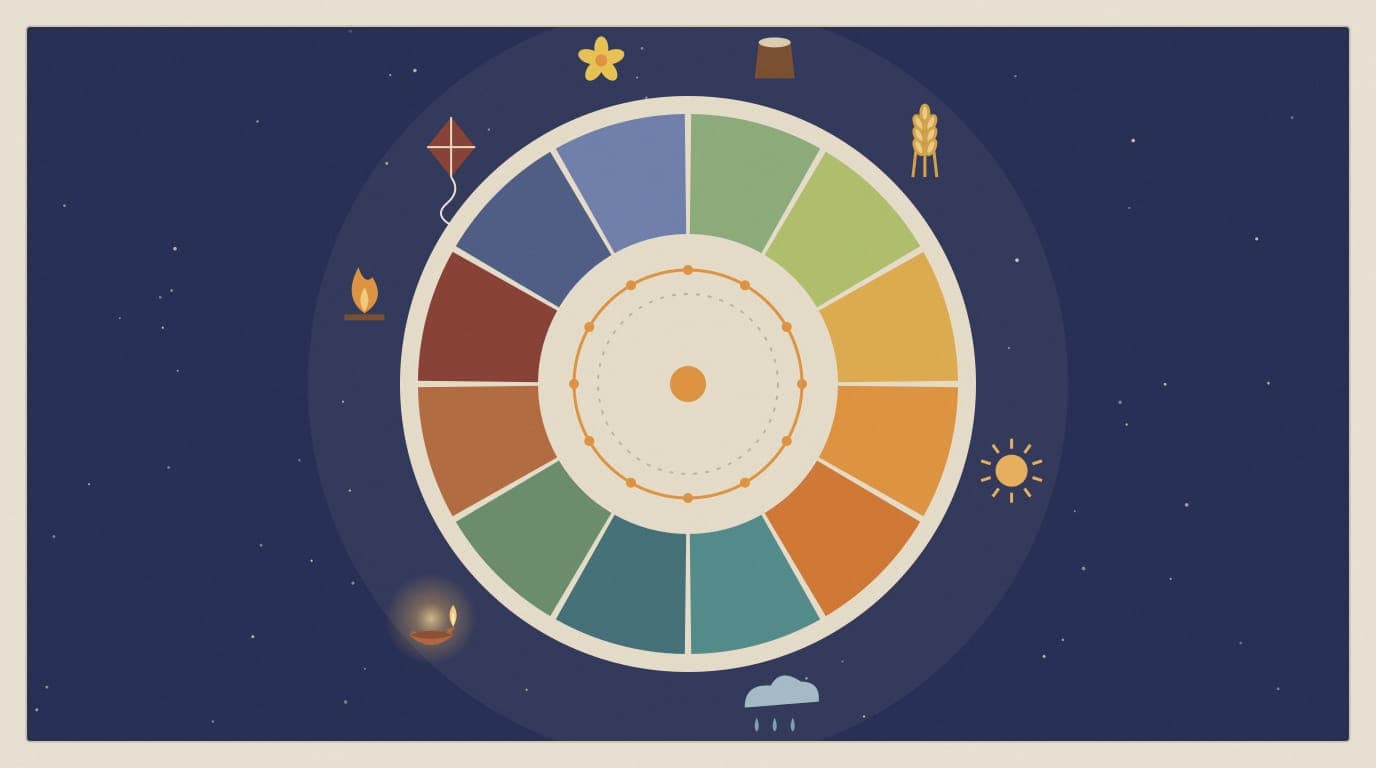
In Sikh calendars, however, the word is used broadly. A jantri will list a dozen or more Gurpurabs across the year, each linked to a specific Guru and event.
The kinds of Gurpurab
Gurpurabs fall into a few recognisable types.
Prakash Purab: birth anniversaries
A Prakash Purab marks the birth of a Guru. Prakash means light or manifestation, and the term reflects the Sikh understanding of the Guru's birth as the appearance of divine light in the world. The most widely observed are those of Guru Nanak Dev Ji and Guru Gobind Singh Ji, but the Prakash Purabs of all ten Gurus appear in Sikh calendars.
Gurgaddi Divas: accession to Guruship
Gurgaddi means "the seat of the Guru". A Gurgaddi Divas marks the day a Guru was installed as successor. The most significant is the anniversary of 1708, when Guru Gobind Singh Ji conferred Guruship on Sri Guru Granth Sahib Ji, ending the line of human Gurus.
Jyoti Jot Divas: the passing of a Guru
When a Guru passed away, Sikhs speak of their light merging with the divine light: jyoti jot samauna. The anniversaries are observed with kirtan and remembrance.
Shaheedi Purab: martyrdom anniversaries
Two Gurus were executed by Mughal authorities: Guru Arjan Dev Ji in Lahore in 1606 and Guru Tegh Bahadur Ji in Delhi in 1675. Their martyrdom anniversaries, the Shaheedi Purabs, are among the most important days in the Sikh year. The tone is one of remembrance and resolve rather than celebration.
Anniversaries of Sri Guru Granth Sahib Ji
Sikhs also mark the Pehla Prakash, the first installation of the Adi Granth at Sri Harmandir Sahib in 1604 under Guru Arjan Dev Ji, and the anniversary of its recognition as Guru in 1708.
Major Gurpurabs at a glance
The following are some of the most widely observed. Because different calendars are in use, we give the traditional month and the approximate Gregorian season rather than a single fixed date.
| Gurpurab | What it marks | Traditional month | Usual Gregorian season |
|---|---|---|---|
| Prakash Purab of Guru Nanak Dev Ji | Birth of the first Guru, 1469 | Katak (full moon) | Late October to November |
| Prakash Purab of Guru Gobind Singh Ji | Birth of the tenth Guru, 1666 | Poh | Late December to January |
| Shaheedi Purab of Guru Arjan Dev Ji | Martyrdom in Lahore, 1606 | Jeth or Harh | May to June |
| Shaheedi Purab of Guru Tegh Bahadur Ji | Martyrdom in Delhi, 1675 | Maghar | November to December |
| Pehla Prakash of Sri Guru Granth Sahib Ji | First installation at Harmandir Sahib, 1604 | Bhadon | August to September |
| Gurgaddi of Sri Guru Granth Sahib Ji | Guruship conferred, 1708 | Katak | October to November |
For a month-by-month view that includes festivals such as Vaisakhi, Hola Mohalla and Bandi Chhor Divas, see our guide to Sikh Gurpurabs and festivals.
Why the Gurus' lives are remembered
A Gurpurab is not a birthday party for a historical figure. Sikhs regard the Gurus as the bearers of one continuous divine light and message, passed from Guru Nanak Dev Ji through the ten Gurus and now present in Sri Guru Granth Sahib Ji. Remembering a Guru's birth, accession or martyrdom is a way of reconnecting with that message and with the example of a life lived by it.
That is why the heart of every Gurpurab is Gurbani: reading it, singing it, and hearing it explained. Everything else, from decorations to processions, is built around that centre.
How Gurpurabs are observed
The elements below appear in most Gurpurab programmes, though no gurdwara uses all of them for every occasion.
- Akhand Path. A continuous reading of Sri Guru Granth Sahib Ji over roughly 48 hours by a relay of readers, concluding on the morning of the Gurpurab.
- Sehaj Path. A reading of the whole scripture at a gentler pace over days or weeks, sometimes completed for a Gurpurab.
- Prabhat Pheri. Early-morning processions singing shabads through the neighbourhood in the days before.
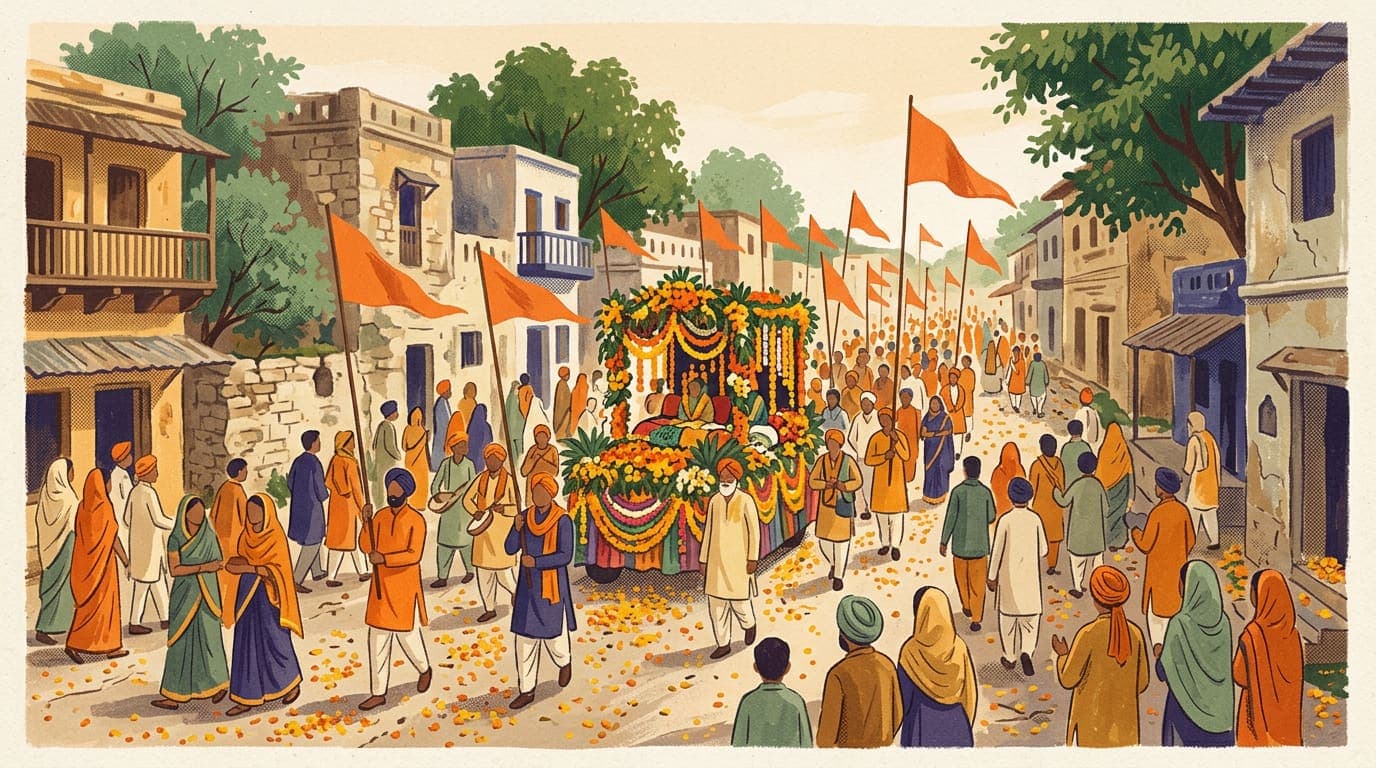
- Nagar Kirtan. A public procession with Sri Guru Granth Sahib Ji on a decorated float, led by the Panj Pyare.
- Kirtan darbar. An extended programme of Gurbani sung by ragi jathas.
- Katha. Talks explaining Gurbani and the history behind the day.
- Langar. The free community meal, served to all.
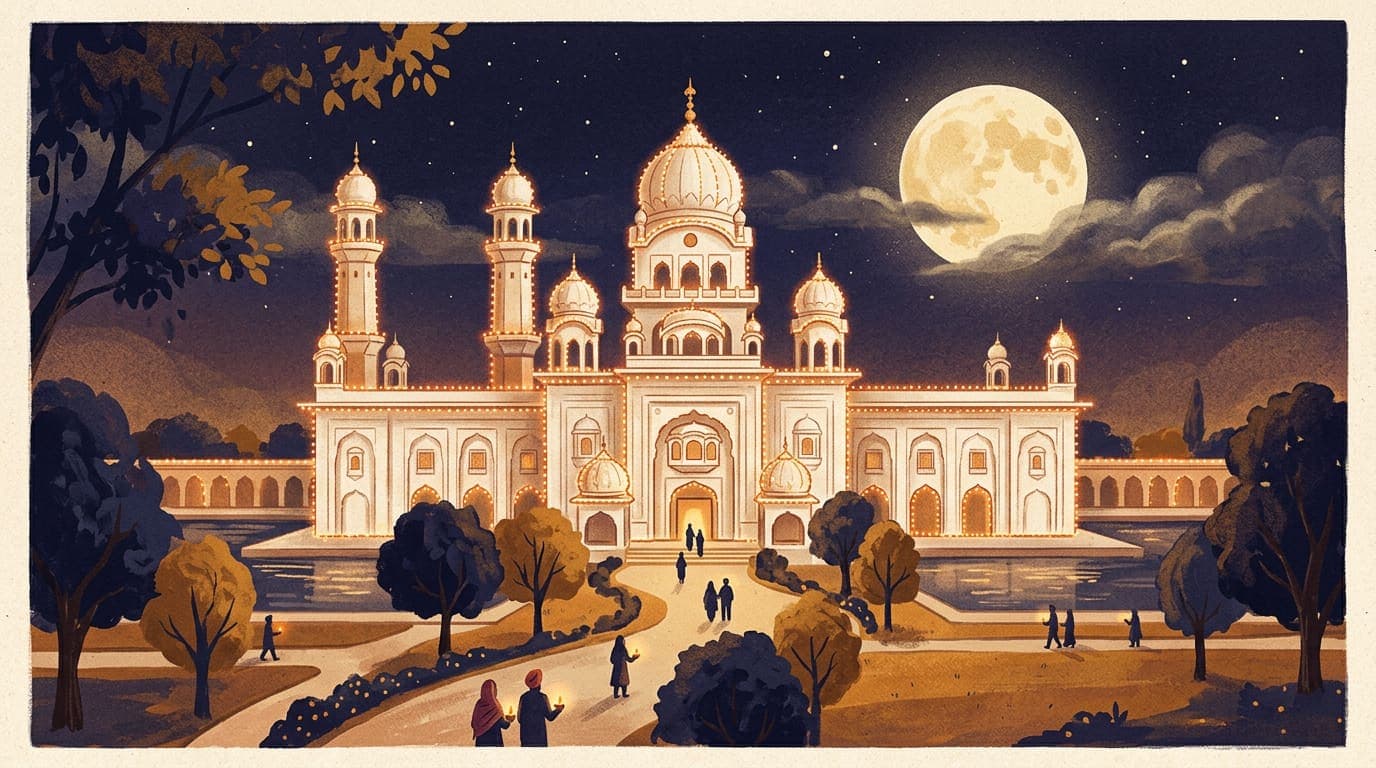
- Deepmala. Illumination of the gurdwara with lights, on joyful occasions.
Chhabeel: a tradition of the summer martyrdom
One tradition deserves special mention. On the Shaheedi Purab of Guru Arjan Dev Ji, which falls in the heat of the Punjabi summer, Sikhs set up chhabeel stalls by the roadside and offer chilled sweetened water or milk to every passer-by. The practice is connected with remembrance of the Guru's suffering in the heat of Lahore. Stopping traffic to offer strangers a cold drink has become one of the most recognisable sights of a Punjabi June.
Gurpurabs and other Sikh festivals
Some major Sikh occasions are not usually called Gurpurabs, even though they are closely linked to the Gurus:
- Vaisakhi, which commemorates the founding of the Khalsa by Guru Gobind Singh Ji in 1699, is generally described as a festival.
- Bandi Chhor Divas remembers the release of Guru Hargobind Ji from Gwalior Fort. See our article on Bandi Chhor Divas.
- Hola Mohalla, begun by Guru Gobind Singh Ji at Anandpur Sahib, is a gathering known for martial displays.
In conversation, people sometimes call any of these a Gurpurab. That is understandable, but calendars usually keep the distinction.
Greetings and etiquette
"Happy Gurpurab" is a warm and widely used greeting for a Prakash Purab. In Punjabi you will hear Gurpurab diyan vadhaiyan ("congratulations on the Gurpurab").
For a Shaheedi Purab, it is better to avoid celebratory greetings. Many Sikhs mark these days with quiet remembrance, and a message acknowledging the Guru's sacrifice is more fitting than "Happy".
If you are visiting a gurdwara on any Gurpurab, the usual customs apply: cover your head, remove your shoes, avoid tobacco and alcohol, and sit with the congregation.
Marking a Gurpurab at home
Not everyone can attend the gurdwara for every Gurpurab. Families often mark the day at home by reading or listening to a Bani connected with the Guru being remembered, telling children the story behind the day, cooking and sharing food with neighbours, or setting aside time for seva. The form matters less than the intention: remembering the Guru, and letting that remembrance shape how the day is spent.
Summary
A Gurpurab is any anniversary connected with the Sikh Gurus or Sri Guru Granth Sahib Ji. Some are joyful, some sombre, and one, the Gurpurab of Guru Nanak Dev Ji, is so widely celebrated that its name has become shorthand for the whole category. Knowing the difference helps you follow a Sikh calendar, choose the right greeting, and understand why a gurdwara might be full of light one month and of quiet reflection the next.
Frequently asked questions
What does the word Gurpurab mean?
Gurpurab combines Gur, from Guru, and purab, from the Sanskrit parva, meaning a festival or sacred occasion. It refers to an anniversary connected with the life of one of the Sikh Gurus or with Sri Guru Granth Sahib Ji.
How many Gurpurabs are there?
There is no fixed number. Sikh calendars list the birth anniversaries of all ten Gurus, their accession to Guruship, their passing, the martyrdoms of Guru Arjan Dev Ji and Guru Tegh Bahadur Ji, and anniversaries connected with Sri Guru Granth Sahib Ji. A handful are observed on a large scale.
Is it appropriate to say 'Happy Gurpurab' on every Gurpurab?
It is appropriate for joyful occasions such as a Guru's Prakash Purab. For martyrdom anniversaries (Shaheedi Purab), many Sikhs avoid celebratory greetings and instead speak of remembrance.
Is Vaisakhi a Gurpurab?
Vaisakhi is usually described as a festival rather than a Gurpurab, although it commemorates Guru Gobind Singh Ji's founding of the Khalsa in 1699. In casual speech people sometimes use Gurpurab loosely for any major Sikh observance.