Sikh Gurpurabs and Sikh Festivals: A Guide to Important Observances
A season-by-season guide to the Sikh year: the major Gurpurabs, martyrdom days and festivals, what each one marks, which calendar sets its date, and roughly when to expect it.
Published Updated 7 min read
In this article
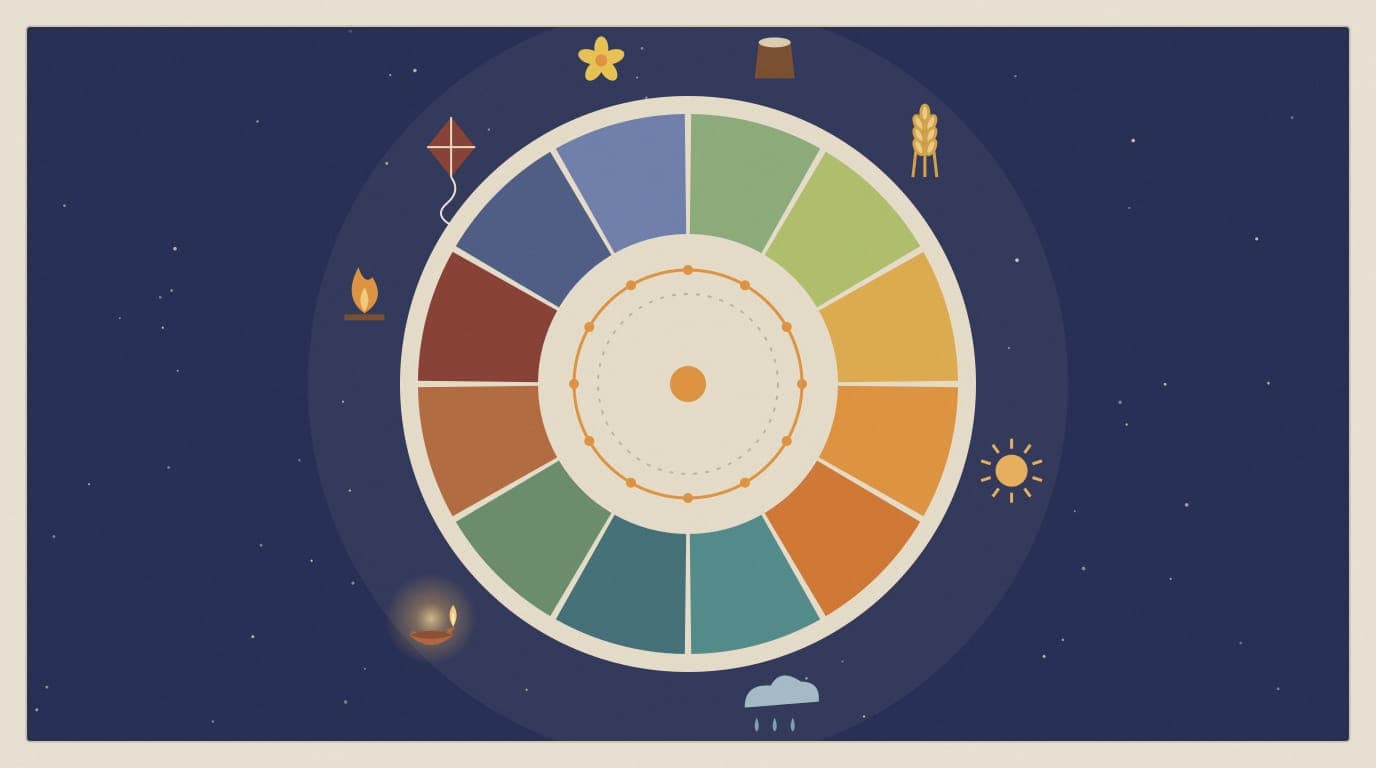
The Sikh year is full of observances. Some, like Vaisakhi and Guru Nanak Gurpurab, are celebrated by very large numbers of people. Others are marked mainly in particular gurdwaras or regions. This guide walks through the year season by season, explaining what each major observance marks and roughly when it falls.
It is a map, not a timetable. Because many observances follow the lunar calendar, and because more than one Sikh calendar is in use, we give typical months rather than fixed dates. For this year's dates, see the calendar published by the SGPC or your local gurdwara, and our practical guide to Sikh dates.
Two kinds of observance
- Gurpurabs mark events in the lives of the Gurus: their birth (Prakash Purab), their accession to Guruship (Gurgaddi Divas), their passing (Joti Jot Divas) and martyrdoms (Shaheedi Purab). Our explainer What Is Gurpurab? covers these in depth.
- Festivals and historical days mark other events, gatherings and seasonal occasions, such as Vaisakhi, Hola Mohalla and Bandi Chhor Divas, as well as the martyrdoms of the Sahibzade and other Sikh martyrs.
Which calendar sets the date?
| Basis | How it behaves | Examples |
|---|---|---|
| Lunar (Bikrami) | Moves by up to several weeks each year | Guru Nanak Gurpurab, Bandi Chhor Divas, Hola Mohalla, and, in the SGPC calendar, most other Gurpurabs |
| Solar (Bikrami Sangrand) | Falls on nearly the same Gregorian date, drifting very slowly over centuries | Vaisakhi, Maghi |
| Fixed (original Nanakshahi) | Same Gregorian date every year | In the Mool Nanakshahi calendar: 5 January, 14 April, 16 June, 24 November |
The SGPC's current calendar places most Gurpurabs on lunar dates. The Mool Nanakshahi calendar, followed by some gurdwaras, especially in the diaspora, fixes many of them. This is why listings sometimes disagree. Our article on the history of the Nanakshahi calendar explains how this came about.
Spring: March to April
Nanakshahi New Year
The Nanakshahi year begins with the month of Chet, in mid-March. It is a modest observance, marked in some gurdwaras with special programmes rather than large public celebrations.
Hola Mohalla
- Marks: a gathering instituted by Guru Gobind Singh Ji, traditionally dated to 1701, as a time for martial exercises, mock battles and poetry.
- When: the day after Holi, in March. It follows the lunar calendar.
- Where: celebrated above all at Anandpur Sahib, where Nihang Singhs display horsemanship and martial skills (gatka) over several days.
Vaisakhi
- Marks: the creation of the Khalsa by Guru Gobind Singh Ji at Anandpur Sahib in 1699, when the Panj Pyare were initiated. It is also the spring harvest festival of Punjab.
- When: 13 or 14 April, set by the solar calendar. The Mool Nanakshahi calendar fixes it on 14 April.
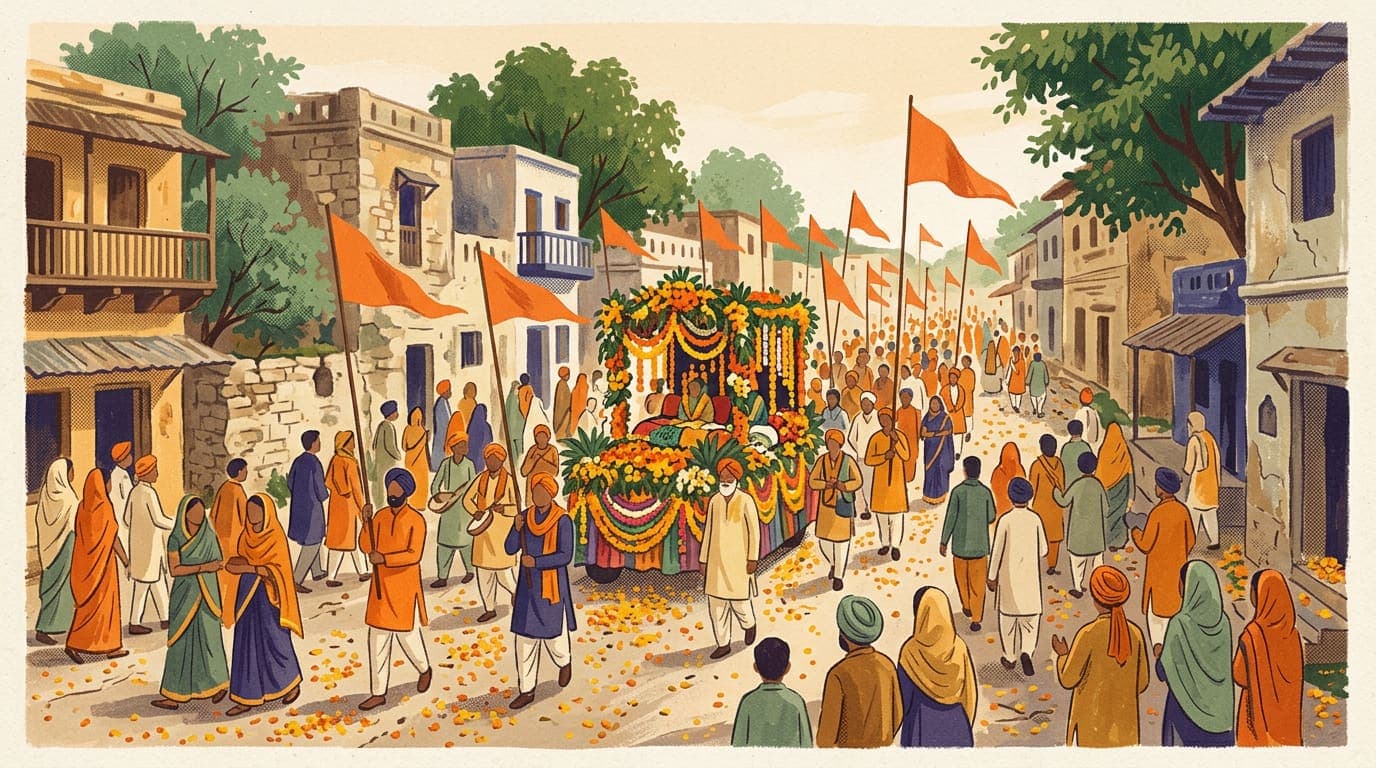
- How: Nagar Kirtans through city streets, Amrit Sanchar (initiation) ceremonies, the replacement of the cloth on the Nishan Sahib, and large gatherings at Takht Sri Damdama Sahib and Anandpur Sahib.
Summer: May to July
Martyrdom of Guru Arjan Dev Ji
- Marks: the martyrdom of the fifth Guru in Lahore in 1606, the first martyrdom in Sikh history.
- When: usually late May or June. The SGPC follows the lunar date; Mool Nanakshahi fixes 16 June.
- How: Sukhmani Sahib, a composition of Guru Arjan Dev Ji, is widely recited. Sikhs set up chhabeels, stalls serving sweetened chilled milk-water (kacchi lassi) free to passers-by in the summer heat, a practice closely associated with this observance.
Monsoon and early autumn: August to September
First Prakash of Sri Guru Granth Sahib Ji
- Marks: the installation of the Adi Granth at Sri Harmandir Sahib by Guru Arjan Dev Ji in 1604, with Baba Buddha Ji as the first granthi.
- When: usually late August or September, following the lunar calendar.
- How: special programmes and illumination at Sri Harmandir Sahib and Nagar Kirtans in Amritsar and elsewhere. Our article on the daily Hukamnama tradition at Harmandir Sahib describes the history of the installation.
Autumn: October to November, the busiest season
Prakash Purab of Guru Ram Das Ji
- Marks: the birth of the fourth Guru, founder of Amritsar.
- When: usually October, on the lunar calendar.
- How: major celebrations at Amritsar, the city he founded.
Gurgaddi Divas of Sri Guru Granth Sahib Ji
- Marks: the conferral of Guruship on Sri Guru Granth Sahib Ji by Guru Gobind Singh Ji at Nanded in 1708.
- When: usually October or November, shortly before Guru Nanak Gurpurab.
- How: celebrated especially at Takht Sachkhand Sri Hazur Sahib. See our guide to historic gurdwaras.
Bandi Chhor Divas
- Marks: the release of Guru Hargobind Ji from Gwalior Fort, with fifty-two kings, and his return to Amritsar.
- When: the same night as Diwali, the new moon of Kartik, in October or November.
- How: Sri Harmandir Sahib is illuminated with lamps and lights, with fireworks in the evening. Read the story of Bandi Chhor Divas and how it relates to Diwali.
Guru Nanak Gurpurab
- Marks: the birth of Guru Nanak Dev Ji, founder of the Sikh faith.
- When: the full moon (Puranmashi) of Kartik, in October or November. It has always followed the lunar calendar, even in the original Nanakshahi calendar.
- How: Prabhat Pheris in the weeks before, an Akhand Path concluding on the day, Nagar Kirtans, illuminated gurdwaras and langar, with great celebrations at Nankana Sahib. See our guides to Guru Nanak Jayanti and Guru Nanak Gurpurab.
Martyrdom of Guru Tegh Bahadur Ji
- Marks: the martyrdom of the ninth Guru in Delhi in 1675, remembered as a sacrifice for the freedom of conscience of others.
- When: usually November or December. The SGPC follows the lunar date; Mool Nanakshahi fixes 24 November.
- How: programmes at Gurdwara Sis Ganj Sahib and Gurdwara Rakab Ganj Sahib in Delhi, and Nagar Kirtans.
Winter: December to February
The martyrdom of the Sahibzade
- Marks: the deaths of Guru Gobind Singh Ji's four sons in December 1704 or 1705 (sources differ). The two elder sons fell in battle at Chamkaur. The two younger sons, Zorawar Singh and Fateh Singh, were executed at Sirhind, along with the death of their grandmother, Mata Gujri Ji.
- When: late December.
- How: the Shaheedi Jor Mel at Fatehgarh Sahib draws very large numbers. Many families observe the period quietly, and some avoid celebrations during these weeks. Since 2022 the Government of India has marked 26 December as "Veer Bal Diwas"; the name has been debated within the Sikh community.
Prakash Purab of Guru Gobind Singh Ji
- Marks: the birth of the tenth Guru at Patna in 1666.
- When: usually late December or January. The SGPC follows the lunar date; Mool Nanakshahi fixes 5 January.
- How: celebrations across the Sikh world, especially at Takht Sri Patna Sahib, with Nagar Kirtans and Akhand Paths.
Lohri and Maghi
- Lohri, on the night of 12 or 13 January, is a Punjabi winter festival with bonfires and songs. It is a cultural and seasonal celebration rather than a Sikh religious observance, and it is celebrated by Punjabis of all backgrounds.
- Maghi, on the first day of the month of Magh, around 13 or 14 January, remembers the Chali Mukte, the Forty Liberated Ones, who died at the battle of Khidrana in 1705. The site is now Sri Muktsar Sahib, where a large fair (mela) is held.
Basant
- Basant, in late January or February, marks the arrival of spring on the lunar calendar. It is a seasonal festival in Punjab, and some gurdwaras hold kirtan in Raga Basant.
Monthly observances
Beyond the annual cycle, many gurdwaras hold special programmes every month:
- Sangrand: the first day of each solar month, when the name of the new month is announced and a passage from the Barah Maha (a composition on the twelve months) is often recited.
- Puranmashi: the full moon.
- Masya: the new moon, marked in some places with gatherings and, at certain historic gurdwaras, bathing in the sarovar.
The year at a glance
| Typical period | Observance | Basis |
|---|---|---|
| Mid-March | Nanakshahi New Year | Solar |
| March | Hola Mohalla | Lunar |
| 13–14 April | Vaisakhi | Solar |
| May–June | Martyrdom of Guru Arjan Dev Ji | Lunar (SGPC) or fixed (Mool) |
| August–September | First Prakash of Sri Guru Granth Sahib Ji | Lunar |
| October | Prakash of Guru Ram Das Ji | Lunar |
| October–November | Gurgaddi of Sri Guru Granth Sahib Ji | Lunar |
| October–November | Bandi Chhor Divas | Lunar |
| October–November | Guru Nanak Gurpurab | Lunar |
| November–December | Martyrdom of Guru Tegh Bahadur Ji | Lunar (SGPC) or fixed (Mool) |
| Late December | Martyrdom of the Sahibzade; Shaheedi Jor Mel | Varies |
| December–January | Prakash of Guru Gobind Singh Ji | Lunar (SGPC) or fixed (Mool) |
| 13–14 January | Maghi | Solar |
| January–February | Basant | Lunar |
Beyond the major observances
The full Sikh calendar also includes the Prakash, Gurgaddi and Joti Jot days of all ten Gurus, the anniversaries of many Sikh martyrs, and days associated with particular historic gurdwaras. Local sangats often have their own anniversaries too, such as the founding of their gurdwara. Your gurdwara's annual calendar is the best guide to what is celebrated locally.
Summary
The Sikh year moves from Hola Mohalla and Vaisakhi in spring, through the summer martyrdom of Guru Arjan Dev Ji, to a crowded autumn of Bandi Chhor Divas, Guru Nanak Gurpurab and the martyrdom of Guru Tegh Bahadur Ji, and on to the winter remembrance of the Sahibzade, the Gurpurab of Guru Gobind Singh Ji and Maghi. Most observances follow the lunar calendar, and different Sikh calendars can give different dates, so check each year. Our practical guide to Sikh dates shows how.
Frequently asked questions
What are the most important Sikh festivals?
The observances most widely celebrated are Vaisakhi, Guru Nanak Gurpurab, Guru Gobind Singh Ji's Gurpurab, Bandi Chhor Divas, Hola Mohalla and the martyrdom days of Guru Arjan Dev Ji and Guru Tegh Bahadur Ji. Communities also mark Maghi, the first Prakash of Sri Guru Granth Sahib Ji and many others.
Why do Sikh festival dates change every year?
Many observances follow the lunar Bikrami calendar, so their Gregorian dates move from year to year. Only a few observances fall on nearly fixed Gregorian dates, and different calendars in use within the Sikh community assign some observances different dates.
What is the difference between a Gurpurab and a festival?
A Gurpurab commemorates an event in the life of a Guru, such as a birth, succession or martyrdom. 'Festival' is a broader English word that also covers occasions such as Vaisakhi, Hola Mohalla and Bandi Chhor Divas, which mark historical events and gatherings rather than a Guru's anniversary alone.