Guru Nanak Jayanti: History, Significance and How Gurpurab Is Celebrated
Guru Nanak Jayanti marks the birth of the first Sikh Guru. Learn why it falls on the full moon of Katak, what happens during Akhand Path and Nagar Kirtan, and how anyone can take part respectfully.
Published Updated 7 min read
In this article
On the full moon of the Punjabi month of Katak, gurdwaras from Amritsar to Auckland are lit up, processions move through city streets, and kitchens prepare langar for anyone who arrives. The occasion is the Gurpurab of Guru Nanak Dev Ji, the first Sikh Guru, known in much of India as Guru Nanak Jayanti.
This article explains who is being remembered, why the date moves each year, what the main observances involve, and how anyone, Sikh or not, can take part with understanding.
Who is remembered on this day
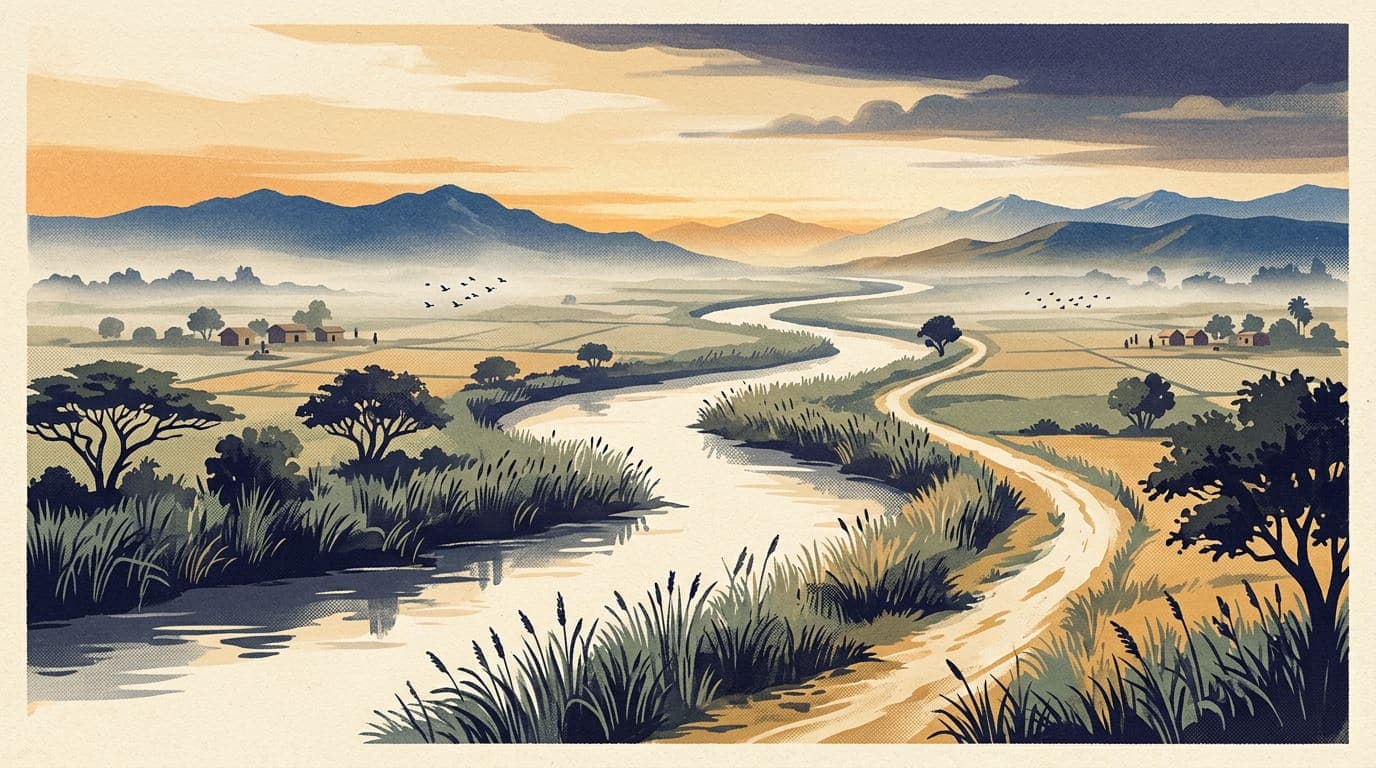
Guru Nanak Dev Ji was born in 1469 in Rai Bhoi di Talwandi, a village in the Punjab that is now Nankana Sahib in Pakistan. He grew up during the rule of the Lodi sultans, worked for a time at Sultanpur Lodhi, travelled widely across South Asia and beyond, and spent his final years as a farmer and teacher at Kartarpur on the river Ravi, where he passed away in 1539.
His hymns, preserved in Sri Guru Granth Sahib Ji, speak of one Creator present in all things, of living honestly, remembering the Divine Name and sharing with others, and of the equality of all people. The nine Gurus who followed him, and the Sikh community as a whole, trace their path to his teaching. For a fuller account of his life, read our biography of Guru Nanak Dev Ji.
What the day is called
The same occasion goes by several names, and all of them are in common use:
- Gurpurab (also spelled Gurpurb): the general Punjabi word for an anniversary connected with a Guru. In everyday speech, "Gurpurab" without further detail usually means this one.
- Prakash Purab or Prakash Utsav: "festival of the light", a term many Sikhs prefer because it speaks of the Guru's light appearing in the world.
- Guru Nanak Jayanti: jayanti is a Hindi and Sanskrit word for a birth anniversary. It is the name used in Indian government holiday lists and much of the national media.
- Guru Nanak Dev Ji's birthday: the plain English description, often used in schools and workplaces abroad.
For a closer look at the word itself, see our explainer What Is Gurpurab?
When it falls
Guru Nanak Jayanti is observed on Katak Puranmashi, the full moon of the month of Katak (Kartik in Hindi). Because this is a lunar date in the traditional Bikrami calendar, the Gregorian date changes every year. It usually falls in November and occasionally at the end of October.
The date has an interesting history of its own. Several early accounts of Guru Nanak Dev Ji's life place his birth in the month of Vaisakh, in April, while the Katak full moon became the established day of celebration. The Katak date is the one observed at Sri Harmandir Sahib and in the great majority of gurdwaras. We explore this question, and the places associated with the celebration, in Guru Nanak Gurpurab: Understanding the Celebration of Guru Nanak Dev Ji's Birth.
The historical setting
Guru Nanak Dev Ji lived at a time of deep religious and social division in Punjab. Society was stratified by caste, religious communities often defined themselves against each other, and the region was about to see the upheaval of Babur's invasions, which the Guru himself described in his hymns.
Against this background his message was strikingly direct. He rejected the idea that ritual purity, birth or outward religious identity made anyone closer to God. He taught in the language of ordinary people, and he established a community at Kartarpur where people of every background worked, sang and ate together. Remembering his birth is, for Sikhs, a way of returning to that message.
How Gurpurab is celebrated
Celebrations follow a broadly similar pattern around the world, though details vary from gurdwara to gurdwara.
Prabhat Pheri
In the days or weeks before the Gurpurab, groups of the sangat go out in the early morning on Prabhat Pheris, walking processions singing shabads through the neighbourhood. Households along the route often welcome them with tea and snacks. The practice turns the whole locality into a place of remembrance before the main day arrives.
Akhand Path
About 48 hours before the Gurpurab, many gurdwaras begin an Akhand Path, a continuous, uninterrupted reading of Sri Guru Granth Sahib Ji from beginning to end. A team of readers takes turns so that the reading never pauses, day or night. The reading is timed to conclude, with the ceremony called the bhog, on the morning of the Gurpurab. Families and individuals often sit and listen for an hour or more at a time.
Nagar Kirtan
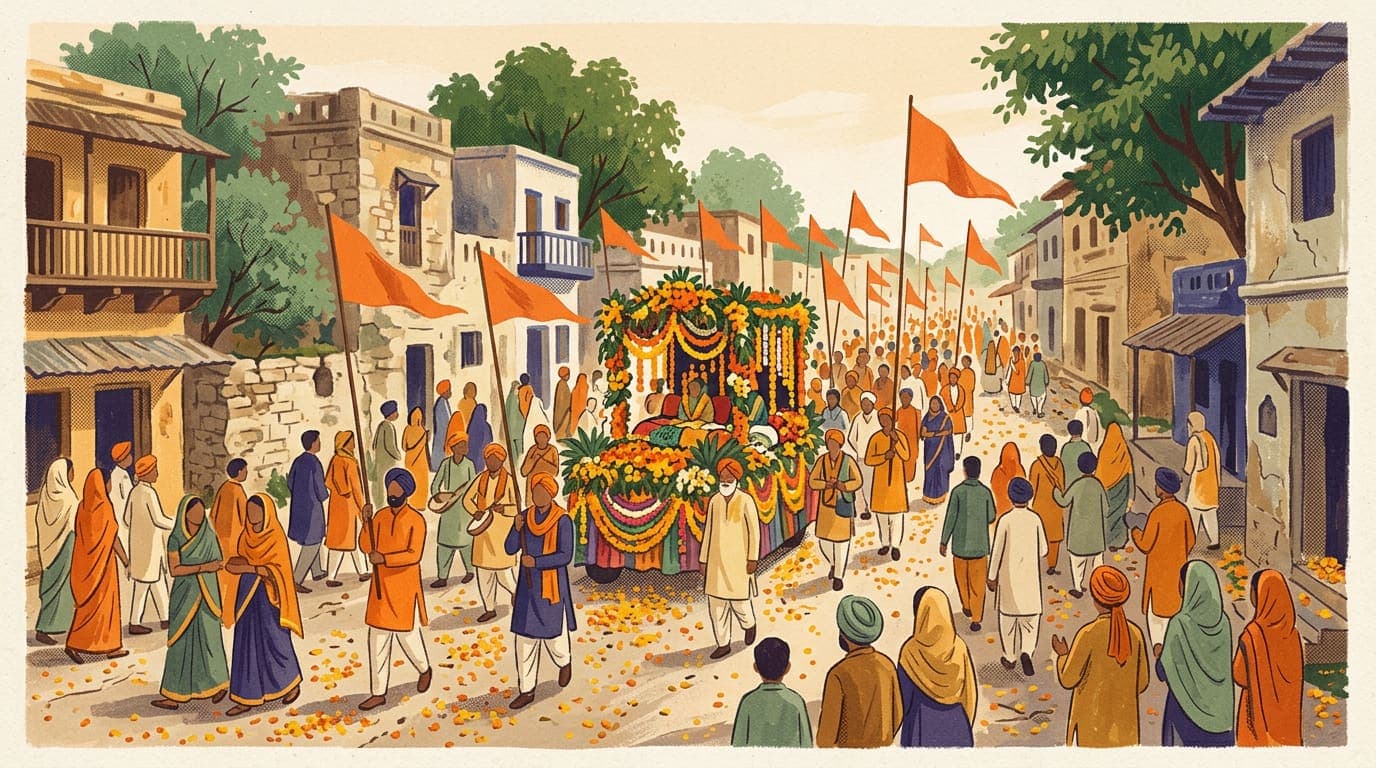
Usually a day or two before the Gurpurab, the sangat takes to the streets in a Nagar Kirtan, literally "kirtan through the town". Sri Guru Granth Sahib Ji is carried on a beautifully decorated float or palanquin. The procession is led by the Panj Pyare, five Sikhs dressed in saffron or blue who represent the first five members of the Khalsa, often with Nishan Sahibs (Sikh flags) carried ahead.
Behind them come groups singing shabads, school bands, and often displays of gatka, the Sikh martial art. Volunteers walk ahead to sweep the road, and stalls along the route offer free food and drinks. The atmosphere is joyful but devotional, and the procession pauses for Ardas at set points.
The Gurpurab diwan
On the day itself, the gurdwara is at its fullest. The programme often begins before dawn with Asa di Var, a composition of Guru Nanak Dev Ji sung in the early morning, and continues through the day with the bhog of the Akhand Path, kirtan by visiting ragi jathas (groups of hymn singers), katha (explanation of Gurbani and history), and Ardas followed by the day's Hukamnama. Many gurdwaras continue kirtan late into the night.
Langar
Throughout the celebrations, the gurdwara's langar, the free community kitchen, serves meals to everyone who comes, regardless of religion, caste or status. Everyone sits together on the floor in rows, called pangat. On Gurpurab the scale can be enormous, and volunteers work in shifts to cook, serve and clean. Langar is not a side activity; it is one of the clearest expressions of Guru Nanak Dev Ji's teaching on equality and sharing.
Lights and illumination
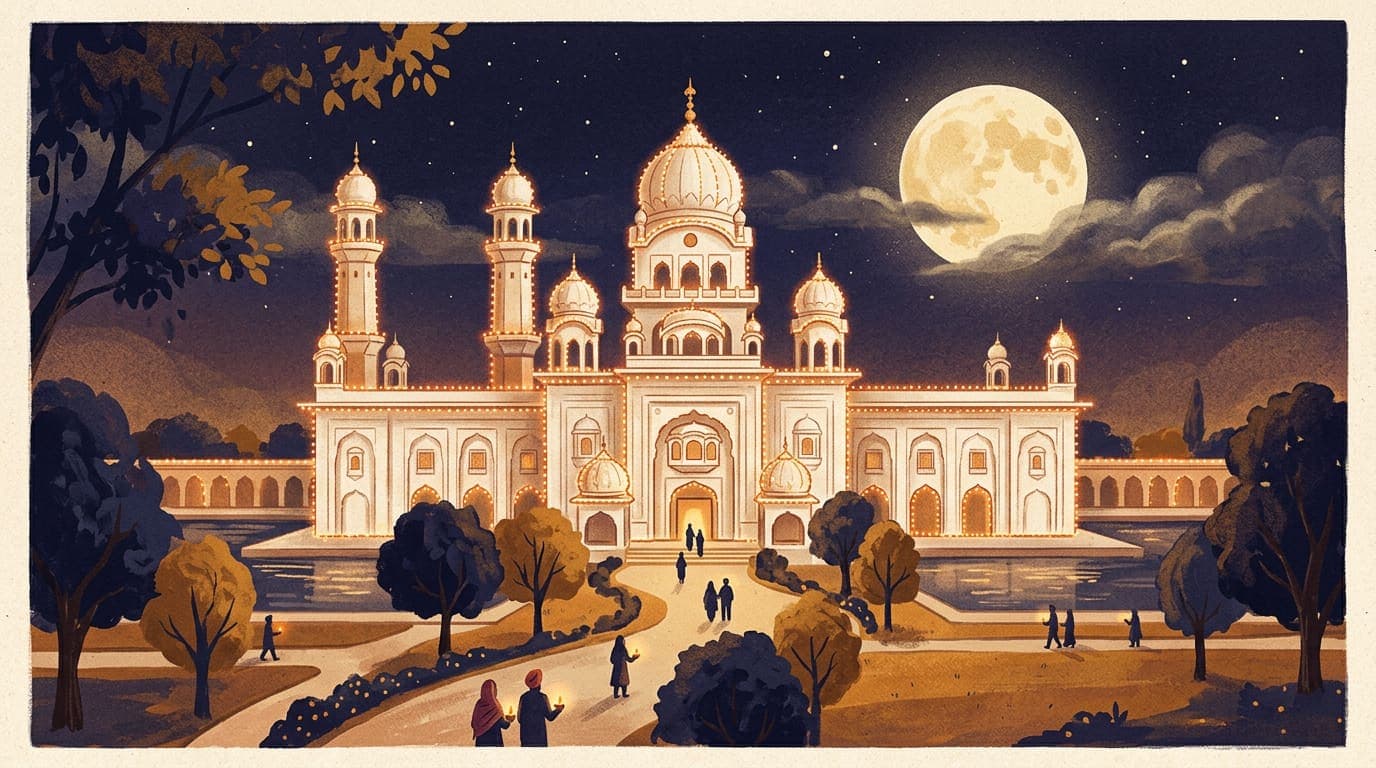
Gurdwaras are decorated with lights and flowers, and some families light lamps at home. At Sri Harmandir Sahib and other major gurdwaras the illuminations draw large crowds in the evening.
Pilgrimage to Nankana Sahib and Kartarpur
For many Sikhs, the deepest wish is to spend the Gurpurab at Gurdwara Janam Asthan in Nankana Sahib, the site associated with the Guru's birth. Each year groups of Indian pilgrims, known as jathas, travel to Pakistan for the occasion under the arrangements the two countries maintain for visits to religious shrines.
The Kartarpur Corridor, opened in November 2019 to mark the 550th anniversary of Guru Nanak Dev Ji's birth, connected Dera Baba Nanak in Indian Punjab with Gurdwara Darbar Sahib Kartarpur, where the Guru spent his final years. Its operation has been suspended at times, so pilgrims should check its current status before planning a visit.
Reflection and community service
Beyond the ceremonies, many Sikhs mark the day through seva, selfless service. Gurdwaras and Sikh organisations commonly run blood donation camps, food distribution for people who are homeless, free medical camps and clean-up drives around the Gurpurab. The idea is simple: the best way to honour a Guru who taught honest work and sharing is to practise them.
It is also a time for personal reflection. Some people make a point of reading Japji Sahib, the composition of Guru Nanak Dev Ji that opens Sri Guru Granth Sahib Ji, with a translation, or of attending katha to learn more about his life.
Taking part as a guest
Guru Nanak Jayanti is a good time to visit a gurdwara for the first time, because the atmosphere is welcoming and there is a great deal happening. A few customs make the visit comfortable for everyone:
- Cover your head. Scarves are usually available at the entrance.
- Remove your shoes and wash your hands before entering the prayer hall.
- Do not bring tobacco, alcohol or other intoxicants onto the premises.
- Sit on the floor with the congregation, avoiding pointing your feet towards Sri Guru Granth Sahib Ji.
- Accept Karah Prashad, the sweet offering, with cupped hands.
- Join the langar. You will be welcome, and helping to serve or wash up is appreciated.
How to wish someone
"Happy Gurpurab" and "Happy Guru Nanak Jayanti" are both widely used and appreciated. In Punjabi, a common greeting is Gurpurab diyan lakh lakh vadhaiyan (ਗੁਰਪੁਰਬ ਦੀਆਂ ਲੱਖ ਲੱਖ ਵਧਾਈਆਂ), meaning roughly "countless congratulations on the Gurpurab". Many Sikhs also greet each other with Waheguru Ji Ka Khalsa, Waheguru Ji Ki Fateh, the standard Sikh greeting, on any occasion.
The meaning of the day
Guru Nanak Jayanti is a celebration, and it is right that it is joyful. But its centre is not the festivity itself. It is the remembrance of a teacher who asked people to see the one Divine in everyone, to earn their living honestly and to share what they have. The lights, processions and langar are all ways of saying that this message is still alive, and that each generation is invited to live it.
Frequently asked questions
When is Guru Nanak Jayanti celebrated?
It is celebrated on Katak Puranmashi, the full moon of the Punjabi month of Katak (Kartik). Because this is a lunar date, it usually falls in November and occasionally in late October, on a different Gregorian date each year.
Is Guru Nanak Jayanti the same as Gurpurab?
Guru Nanak Jayanti is one Gurpurab. The word Gurpurab covers anniversaries connected with all the Sikh Gurus, but because Guru Nanak Dev Ji's is the most widely celebrated, many people use 'Gurpurab' to mean this day specifically.
Can non-Sikhs attend Guru Nanak Jayanti celebrations?
Yes. Gurdwaras are open to everyone. Visitors are asked to cover their heads, remove their shoes, avoid tobacco and alcohol, and sit on the floor with the congregation. Langar is served free to all.
What does Prakash Purab mean?
Prakash means light or manifestation, and purab means a sacred occasion. Sikhs often call the birth anniversary of a Guru a Prakash Purab, emphasising the appearance of the Guru's light in the world rather than simply a birthday.